
Well over 200 [Acts 28:37] passengers, sailors, prisoners and travelers swim, float, ride the storm waves or a piece of ship timber to the shores of Malta. As we read in Acts 27, they are on their way to Rome. They as in meaning, at minimum, Paul and Luke. Luke continues to us the plural “WE.” Paul is a prisoner but there is no reason to suggest Luke is anything but a passenger, close ally, friend of Paul and his secretary or scribe.
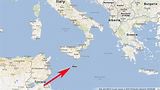
In comparison to significant islands, Malta sits north of Africa and south of the toe of Italy; 122 square miles of occupied island. Like most storms, rain is a major factor. Finding dry wood for fires to keep the stranded warm would be difficult. Luke puts it clearly…(v2) “The native people showed us unusual kindness, for they kindled a fire and welcomed us all, because it had begun to rain and was cold.Unusual kindness? Welcomed them (strangers)? Started the fires for them? Yes, Luke is correct per their unusual kindness. (Historical note since the Noah flood. Do we know who these people are?)J
JVI insider note: Malta was settled according to historians around the same time as the Northern Kingdom of Israel including Phoenicia were being invaded and dispersed by the Assyrians; 750 to 700 B.C. We know that there were tight bonds between the northern Tribes of Israel and the Phoenicians. So much so we also have of a name given to this mix of people – Phoenician Hebrews. History attributes the settling of Malta to Phoenicians. We also know from previous studies that the Tribe of Dan, the Merchant Marines of Egypt during the time of Israeli captivity in Egypt, settled trading posts throughout the Mediterranean including Malta. A very tight bond existed over the centuries between Phoenicians, Danites, and the Tribe of Zebulon; all seafaring people known for centuries as the “sea-people.”
Back to Acts….
Acts 28:3 is a rather startling passage. Paul, as one of the prisoners, was gathering wood for the fire(s) the Malta natives had started for them. While doing so, he is bitten by a viper sometimes known as the three-step snake. It is called that because it’s venom is very quick to paralyze the body including lungs, heart, and physical functions. But, the natives noticed in short order that Paul continued with his work after shaking the viper off his hand or wrist back into the fire.
When the viper bit Paul, the natives immediately blamed or perceived Paul as a murderer. These people believed that bad things happened as a justice system from the gods. The viper hanging from Paul’s hand was this perceived justice. But….!

Paul shook the viper off by hanging his hand and arm over the fire. The viper let loose now being concerned for its own life. TOO LATE. While the natives waited for Paul to show the effects of the venom
, Paul simply continued his work. Now instead of being perceived as a murderer he is elevated to the status of a god by the natives. Word spread quickly of this miracle over their three months stranded on Malta. Paul during this time healed a wealthy man on this island; one that had great property ownership [Acts 28:8]. Soon and over the three months they wintered on Malta, many other islanders brought their sick to Paul. The bible states that “ANY” who were brought to him were healed.
One must wonder what the Roman guards, sailors, passengers and other prisoners thought about this miracle stuff. A prisoner was doing nothing but good and demonstrating his connection with God. Interesting that in Acts 28:11, Luke decides to mention some of the gods of Rome such as Jupiter and the sons of Jupiter, that is, the twins Dioscuri: – Castor and Pollux. In this we may find our answer to what the Roman guards and sailors thought about Paul performing such miracles. Rome had many gods including one to their unknown god. Here is a god that heals the sick and lame; Paul’s God.
After wintering on Malta, they find another ship. Their route to Rome includes stops at Syracuse, Rhegium, Puteoli, *Appi, then by foot to Rome.

*The Appian [Appi] Way was famous for several reasons. It was a straight road that went to Rome up the Italian coast line. Hand constructed and extending well over 200 miles it was the super highway of that day. In fact the Appian Way divided at Beneventum into two parallel roads both leading to and from Brundisium, Italy. It may have been the first divided highway of record (humor intended but factual).
Fellow believers from Rome and surrounding areas somehow learned of Paul and his journey toward them. They came south to meet up with him. This tells us that there already existed believers (The Way) in Rome and Italy. We find in Acts 28:16 of another unusual event. All prisoners were then delivered to the Roman Captain of the guard, but Paul was allowed to dwell in his own place with but one guard. This put that guard under Paul’s constant witnessing and possibly healings.
Now Paul does something rather unusual but not so unusual for him. He is the guy who continually darkened the doorway to any synagogue he passed even at the threat of his life. Acts 28:17 says he called together leaders of the Jews The Way. “Men and brethren, though I have committed nothing wrong against the people and the customs of our fathers…” I am here as a prisoner. He identifies both Jews and members of The Way by calling them “men” and “brethren.” He distinguishes between them because they are different groups but at the same gathering.
Even though Paul had continually been persecuted or harassed by Jewish accusers in Asia, Macedonia, Palestine, Antioch and Jerusalem, these folks in Rome claim to have heard nothing about him being accused or on trial, but they knew of him. Paul does distinguish between the two groups but here in v21, 22 we discover that the Jews of Rome thought of The Way as a sect… a group from within Judaism itself.
“We have received no letters from Judea about you, and none of the brothers coming here has reported or spoken any evil about you. But we desire to hear from you what your views are, for with regard to this *sect we know that everywhere it is spoken against.”
A *sect? The Jews of Rome knew of but did not understand The Way as some type of violation of Jewish Law but a schism within Judaism. It was similar to another denomination similar to evangelicals of today; Methodists, Baptists, Brethren, Presbyterians, etc. The Jews saw The Way as coming from within Judaism; Jewish at its roots…not to include Gentiles. Paul set out to change all of that. He is called to the Gentiles [Romans 1:13].

JIV HISTORICAL NOTATION: The Appian (high)Way is very famous and was significant to the survival of the Roman Empire itself. Plus as a very strong message to all entering the capital of the Roman Empire, there was a constant line of crucified men, woman, and children along the Appian Way. There was nothing subtle about it. Be a problem to Rome and hang for it. The practice of crucifixion is not exclusive to Mt. Calvary, that is Golgotha. This method of death was a common practice of the Roman Empire. They were brutal conquerors. Something secular history fails to point out
From morning till evening he expounded to them, testifying to the kingdom of God and trying to convince them [understand] about Jesus both from the Law of Moses and from the Prophets.
Act 28:24 And some were convinced by what he said, but others disbelieved [Acts 28:23 & 24].
“‘Go to this people, and say, “You will indeed hear but never understand, and you will indeed see but never perceive.” For this people’s heart has grown dull, and with their ears they can barely hear, and their eyes they have closed; lest they should see [become aware] with their eyes and hear with their ears [gain knowledge] and understand with their heart and turn [desire], and I would heal them.’ Therefore let it be known to you that this salvation of God has been sent to the Gentiles; that they will listen.”
Sounds a bit like too many churches of today. People come to hear but do not seek understanding then desire to change and take action in his or her personal life to make the change.
Rev. Dr. Jstark
Conclusion of our Book of Acts study – 2018


 inal church. It has



 King Agrippa II states that he would like to hear from this man named Paul. [v22]. Whether it was to see and hear from Paul or the pomp and circumstances provided him at this meeting Agrippa wanted (see verse 23) is unknown. However the bible includes “





 JIV QUESTION: Has anyone noticed in this series of Acts articles that no one put Paul and company up in a motel? They lodged them in their own homes and supposedly fed them. In today’s church we do just the opposite. We book a room for him or her at a Motel 6 or if the guest speaker is renown s/he is put up in a Holiday Express or Inn. What little things can reveal about our hearts and true spirit.
 Finally we get a number to relate to Paul’s missionary successes. Acts 21:20 states:
 What seems to be a bit amazing is when Eutychus falls to the ground below from the third loft (KJV) and is taken for dead, Paul simply runs down the steps to him, embraces him saying “
 the church”

 Fear engulfed the area as word spread about the attack on the 7 sons of Priest Sceva. We are not given their names so the emphasis of this passage is the consequence; not the who did it. Some if not most of the mystics in the area fell into the same fear of delving into the spiritual world for which they had little of NO understanding; knowledge but no understanding. This passage tells us that these magicians who practiced the dark cult and/or were using the name of Jesus to gain personal recognition brought their books, manuscripts and tools of their mystic arts to a huge fire. Read and listen to this…They in essence “burned the witch at the stake.” Hmmm?

 AHA Bible Moments