Article #18 of Daniel Series

The Tree Dream

We just came off of Article 17 where Nebuchadnezzar had a horrifying dream (Daniel 4:10-17). The dream was one that 400 Babylonian advisers to the king would not or could not interpret. Verse 4:18 the king is asking Daniel (Belteshazzar) to give him the meaning of this “TREE” dream.

Daniel 4:19

Then Daniel, whose name was Belteshazzar, was *astonied (stricken dumb; ASV) for one hour, and his thoughts troubled him. The king spake, and said, Belteshazzar, let not the dream, or the interpretation thereof, trouble thee. Belteshazzar answered and said, My lord, the dream be to them that hate thee, and the interpretation thereof to thine enemies.

*Astonied means stunned or hesitant. Daniel was not stunned at the question or who asked for the interpretation, but at what he already knew was the meaning of the dream.

Once again, Nebuchadnezzar uses Daniel’s Jewish name, and then confirms Daniel’s Babylonian name so all would know to whom the king is referring.

Back in verse 9 the king confidently asserts that nothing troubles Daniel – that is, up until now! We will see in chapter nine that Daniel was familiar with Jeremiah’s prophecies in chapter 27:“And now have I given all these lands unto the hand of Nebuchadnezzar the king of Babylon, my servant; and the beasts of the field have I given him also to serve him. And all nations shall serve him, and his son, and his son’s son, until the very time of his land come: and then many nations and great kings shall serve themselves of him.” (Jer 27:6-7) This is another remarkable prophecy that accurately foretells that after Nebuchadnezzar (whom God calls ‘My servant’), his son [Evil-Marduk] and then his grandson [Belshazzar] will rule Babylon until their time is up. As for Daniel’s thoughts, if God had raised up Nebuchadnezzar for a purpose (that of bringing judgment on the house of Judah), what was to happen to him now? No wonder Daniel was ‘astonied’ [astonished, dazed]. And then there is the question of how exactly do you break this information/news to the king?

This hour must have been one of the longest of Nebuchadnezzar’s life; eventually he says to Daniel ‘Don’t let the dream trouble you (as well)’. If Daniel is troubled this is not good. Finally Daniel says in effect ‘If only this dream were about your enemies; but alas…it is about the king himself.

Daniel 4:20-22

20 The tree that thou sawest, which grew, and was strong, whose height reached unto the heaven, and the sight thereof to all the earth;

21 Whose leaves were fair, and the fruit thereof much, and in it was meat for all; under which the beasts of the field dwelt, and upon whose branches the fowls of the heaven had their habitation:

22 It is thou, O king, that art grown and become strong: for thy greatness is grown, and reacheth unto heaven, and thy dominion to the end of the earth.

Thus what Nebuchadnezzar probably feared is confirmed, he is the tree. After all some time earlier he was the head of a huge statue, why not also the tree? It is the next bit that is of most concern to both Daniel and Nebuchadnezzar…

Daniel 4:23

And whereas the king saw a watcher and an holy one coming down from heaven, and saying, Cut the tree down, and destroy it; yet leave the stump of the roots thereof in the earth, even with a band of iron and brass, in the tender grass of the field; and let it be wet with the dew of heaven, and let his portion be with the beasts of the field, till seven times pass over him;

The ‘watcher’ from the context is an angel who comes down from the Holy One in Heaven. The important points in this verse are that the tree is to be cut down but the root is to remain. However the root or base of the tree stump is to be bound with iron and brass. (JIV) At the beginning of the verse the vocabulary refers to ‘it’ i.e. an impersonal pronoun, but by the end of the sentence the vocabulary changes to use the personal pronoun ‘his/him’. Thus this verse could be seen to have a double reference; firstly to king Nebuchadnezzar who is already identified as the tree in verse 22; and secondly the reference may be to Nebuchadnezzar’s dominion i.e. the kingdom of Babylon; will it rise again?

The reference to seven times is seen by most Bible commentators to represent seven years. In Daniel 7:25 and Rev 12:14 we read of time (singular) times (plural) and half a time. From the context we understand that this is referring to three and a half years (specifically the last three and a half years of the Tribulation), where time = 1 year, times = 2 years and half a time = 6 months. Thus Daniel is saying that Nebuchadnezzar is going to be cut down for seven years, during which time he will be covered with the dew and have his portion [food] with the beasts of the field. Some translations use the word “seasons.” This would mean the time of Neb’s insanity would be 7 seasons; i.e. 1 ¾ years. By traditional measures.

Is there a problem with their ‘seasons’ theory? YUP! The Babylonians only counted summer and winter as seasons. This would make 7 seasons or 3 ½ years. 3 summers and 3 winters PLUS one additional summer or winter seasons. I write (teach) but YOU Decide.

Daniel 4:24

This is the interpretation, O king, and this is the decree of the most High, which is come upon my lord the king:

King Nebuchadnezzar was all too familiar with issuing decrees; now one had been issued against him by the highest authority that there is – the Most High God and he knew it. This had to be stunning to him. He was the supreme and is now discovering he isn’t. “The most HIGH…” Daniel calls recognition to God; not the gods of Babylon.

Daniel 4:25

That they shall drive thee from men, and thy dwelling shall be with the beasts of the field, and they shall make thee to eat grass as oxen, and they shall wet thee with the dew of heaven, and seven times shall pass over thee, till thou know that the most High ruleth in the kingdom of men, and giveth it to whomsoever he will.

Daniel explains to the king exactly what will happen to him, how he will be humbled until (whenever you see an ‘until’ in the Bible take note!), [until] he finally realizes that it is the most High who rules in the kingdom of men, and He will give it to whomsoever He chooses. This is the third time this lesson had been taught to the king (two warnings and then this pronounced judgment – see Daniel 2:37-38 & Daniel 3:28-29), on the previous two occasions he completely missed the point – this time he will finally get it.


Daniel 4:26

And whereas they commanded to leave the stump of the tree roots; thy kingdom shall be sure unto thee, after that thou shalt have known that the heavens do rule.

Throughout this period Nebuchadnezzar did not lose his throne, an incredible fact in itself. And yes, he will learn his lesson this time. The obvious but not addressed is who is the “THEY”? What is even more amazing, he Nebuchadnezzar continued as usual for another 12 months.

We have free will but God has more than one option to convince us of something. This does not mean we will finally do it God’s way but it does show a merciful God who offers many chances or opportunities.

Daniel 4:27

Wherefore, O king, let my counsel be acceptable unto thee, and break off thy sins by righteousness, and thine iniquities by shewing mercy to the poor; if it may be a lengthening of thy tranquility.

Here Daniel pleads with the king to repent of his pride and iniquities in the hope that these events will be postponed or not occur. There was no immediate consequence to Daniel’s prophecy of 7 years. This gave the king plenty of time to forget what had been told him; perhaps even the dream itself. This is far too often the case with new Christians. Once a new born Christian prays for forgiveness, some wain in their initial joy. Psalms 51:12: King David pleads for exactly the same thing; a return to his initial joy in God.

Daniel 4:28

All this came upon the king Nebuchadnezzar.

…however, as king Neb himself records here, all this happened as Daniel had interpreted. Recall that this review of Nebuchadnezzar’s life and struggle with the One God is recorded by Daniel but from the mouth of Neb himself.

Daniel 4:29

At the end of twelve months he walked in the palace of the kingdom of Babylon.

We know from 2 Peter 3:9 that God is longsuffering toward us; here we find that God gave Nebuchadnezzar a year to repent, but as Jeremiah records in 17:9 “The heart is deceitful above all things, and desperately wicked: who can know it?” So one evening the king is out for a stroll looking at his kingdom and feeling invincible…

Daniel 4:30

The king spake, and said, Is not this great Babylon, that I have built for the house of the kingdom by the might of my power, and for the honor of my majesty?

Oops! Proverbs 6:16-19 says: “These six things doth the LORD hate: yea, seven are an abomination unto him: A proud look, a lying tongue, and hands that shed innocent blood, An heart that deviseth wicked imaginations, feet that be swift in running to mischief, A false witness that speaketh lies, and he that soweth discord among brethren.” Notice what is top of the list? A proud or haughty look; the look at the “me syndrome.”

Again we read: “Every one that is proud in heart is an abomination to the LORD: though hand join in hand, he shall not be unpunished.” (Proverbs 16:5) “Pride goeth before destruction, and an haughty spirit before a fall” (Proverbs 16:18) “A man’s pride shall bring him low: but shall uphold the humble in spirit” (Proverbs 29:23)

In a nutshell, God hates pride. Pride was the sin of Satan (1 Timothy 3:6 see also Isaiah 14:13-15 & Ezekiel 28:14-17). Both James and Peter tell us that God resists the proud but gives grace to the humble. It is not wise to put one’s self in a position where God is resisting you ‘cuz you ain’t gonna’ win!

Daniel 4:31

While the word was in the king’s mouth, there fell a voice from heaven, saying, O king Nebuchadnezzar, to thee it is spoken; The kingdom is [now] departed from thee.

The terror of this is almost unimaginable. However God through Daniel and a dream had warned him of this judgment a year before, so the king was without excuse. The same is true for the people in this world; God has given ample warning through His two witnesses; the law and the prophets (also see Luke 16:31) and has foretold the coming judgment ‘so they are without excuse’. Revelation 11 also warns of a time two witnesses in Jerusalem will preach 24/7 for three and a half years about turning to God and away from the antichrist.

The speed which this judgment fell should be a wake-up call for anyone ‘dabbling’ in sin.

Daniel Article #17

CHAPTER 4
Daniel 4:1

Nebuchadnezzar the king, unto all people, nations, and languages, that dwell in all the earth; Peace be multiplied unto you.

The first thing to note is that it appears that it is Nebuchadnezzar who is now doing the writing! It is the ONLY chapter of the Bible written by a Gentile king; be it by his hand or the hand of Daniel we do not know. It may have only been a decree that Daniel is quoting verbatim, but Nebuchadnezzar’s words.

Daniel 4:2

I thought it good to shew the signs and wonders that the high God hath wrought toward me.

Something has obviously changed in this man’s life – “What about the life that’s showing I’m undergoing the change?” – Steven Curtis Chapman.

Daniel 4:3

How great are his signs! How mighty are his wonders! His kingdom is an everlasting kingdom, and his dominion is from generation to generation.

This is being said by the most powerful ruler on the earth at that time! What a contrast to chapter 3 where Neb’s image of gold suggested that his was an everlasting kingdom; a total misunderstanding of his previous dream as interpreted by Daniel of a statue of gold, silver, bronze, iron and iron with clay mix. This most likely is written by the hand of Daniel by translating what Nebuchadnezzar says in the aftermath of these events.

Daniel 4:4

I Nebuchadnezzar was at rest in mine house, and flourishing in my palace:

On the surface he was flourishing – like so many in this world, thinking that they have it all, not aware that it can all disappear like that.

And he spake a parable unto them, saying, the ground of a certain rich man brought forth plentifully: And he thought within himself, saying, what shall I do, because I have no room where to store my fruits? And he said, This will I do: I will pull down my barns, and build greater; and there will I bestow all my fruits and my goods. And I will say to my soul, Soul, thou hast much goods laid up for many years; take thine ease, eat, drink, and be merry. But God said unto him, Thou fool, this night thy soul shall be required of thee. Then whose shall those things be, which thou hast provided? So is he that layeth up treasure for himself, and is not rich toward God.” (Luke 12:16-21; Matthew 6:19-21)

How challenging is Daniel 4:4 when compared to Luke 12:16-21. What does it mean to “lay up treasures? It does not mean to be foolish and squander. It does not mean to be fruitful. It does not mean to preserve for today but it does mean the future is not in one’s possessions.

Daniel 4:5

I saw a dream which made me afraid, and the thoughts upon my bed and the visions of my head troubled me.

God has a way of getting our attention. Even the hardest, most unreachable people in our eyes are never beyond the reach of God. I suspect that Daniel had been praying for his king and friend for some time, believing that God was able to get through to him. If there is no god why do so many atheist, agnostics, cynics, and politically correct societies spend so much time trying to disprove him by their statements, actions, writings, and positions?

Daniel 4:6

Therefore made I a decree to bring in all the wise men of Babylon before me, that they might make known unto me the interpretation of the dream.

Daniel was well known to the king by now, so why not just call him? I think that Neb realized this dream was not good and wanted to hear a sugar coated interpretation rather than the truth. We see exactly the same with Ahab, king of Israel in 1 Kings 22:6-8 “Then the king of Israel gathered the prophets together, about four hundred men, and said unto them, Shall I go against Ramoth-gilead to battle, or shall I forbear? And they said, Go up; for the Lord shall deliver it into the hand of the king. And Jehoshaphat

said, Is there not here a prophet of the LORD besides these 400 men, that we might inquire of him? And the king of Israel said unto Jehoshaphat (King of Judah), There is yet one man, Micaiah the son of Imlah, by whom we may inquire of the LORD: but I hate him; for he doth not prophesy good concerning me, but evil.” So the reason that Ahab didn’t ask is basically because he told the truth – and sometimes the truth is hard to take! I think that is why king Nebuchadnezzar didn’t first call Daniel.

This is why we often go to the wrong places for advice or sympathy. The “Oh woe is me” syndrome, but don’t tell me it is my fault. Just give me some more of my self!

Daniel 4:7

Then came in the magicians, the astrologers, the Chaldeans, and the soothsayers: and I told the dream before them; but they did not make known unto me the interpretation thereof.

This tells a story! In chapter two the Chaldeans were straight with their ‘dummies guide to interpreting dreams’. This is what they were famous for as we mentioned in chapter two. And this time the king even tells them the dream so it should be easy for them – but then again, they have had their fingers burnt by a certain Daniel too many times by now; even if they did interpret the dream, Daniel was bound to come along and tell them they’d got it wrong! They just were not going to take that chance. Notice they ‘did not make known’ not ‘were not able’. It appears that they didn’t even try!

Daniel 4:8

But at the last Daniel came in before me, whose name was Belteshazzar, according to the name of my god, and in whom is the spirit of the holy gods: and before him I told the dream, saying,

So finally king Neb gives up and accepts the inevitable. But who does Neb say came in? Aha moment – DANIEL! – that is his Hebrew name, yet king Neb chooses to use this in telling us the history of these events, adding his Babylonian name just in case anyone else didn’t know who Daniel was. How amazing that after all this time in Babylon (Daniel would have been about 50 years old by now), with so much pressure to blend into their culture (when in Rome do as they do ‘syndrome’) that Daniel retains his Jewish identity and the name that glorifies his God. But also not that Nebuchadnezzar still confesses his god by saying “according to the name of my god”; not the God with whom by now he was well aware.

Daniel 4:9

O Belteshazzar, master of the magicians, because I know that the spirit of the holy gods is in thee, and no secret troubleth thee, tell me the visions of my dream that I have seen, and the interpretation thereof. Neb still gave credit to his gods…

This is an interesting verse because Nebuchadnezzar informs us that Daniel is ‘chief of the Magi’. Now the Magi [Bethlehem? Christmas Maji?] were essentially a Persian religious sect specializing in the mystical; so what was Daniel doing in charge of them? The Magi are a tribe that settled in Mede to the east of Babylon; i.e. Medo-Persia.

We will find out in chapter 6 that it was not something that was happily accepted by some of his contemporaries; but it appears that Daniel had converted this group (Tribe of the Magi) and told them about the prophecies regarding the coming Jewish Messiah. How do we know this? Because just over 500 years later, a group of these Magi travelled for miles across the middle eastern deserts to Israel to celebrate the birth of a baby that had been born King of the Jews! These Magi didn’t go to the stable but to Joseph and Mary’s house in Nazareth – we have been duped by tradition into thinking that there were 3 wise men, or 3 kings and they went to the stable. Wrong, Wrong, Wrong! [Mark 7:13].

Also in this verse we have confirmed that king Neb knew that Daniel could and would be able to interpret the dream. What a testimony Daniel has: ‘no secret troubleth thee’, “Thou wilt keep him in perfect peace, whose mind is stayed on thee: because he trusteth in thee.” (Isaiah 26:3)

The Dream – Daniel 4:10-17

10 Thus were the visions of mine head in my bed; I saw, and behold a tree in the midst of the earth, and the height thereof was great.

11 The tree grew, and was strong, and the height thereof reached unto heaven, and the sight thereof to the end of all the earth:

12 The leaves thereof were fair, and the fruit thereof much, and in it was meat for all: the beasts of the field had shadow under it, and the fowls of the heaven dwelt in the boughs thereof, and all flesh was fed of it.

13 I saw in the visions of my head upon my bed, and, behold, a watcher and an holy one came down from heaven;

14 He cried aloud, and said thus, Hew down the tree, and cut off his branches, shake off his leaves, and scatter his fruit: let the beasts get away from under it, and the fowls from his branches:

15 Nevertheless leave the stump of his roots in the earth, even with a band of iron and brass, in the tender grass of the field; and let it be wet with the dew of heaven, and let his portion be with the beasts in the grass of the earth:

16 Let his heart be changed from man’s, and let a beast’s heart be given unto him; and let seven times pass over him.

17 This matter is by the decree of the watchers, and the demand by the word of the holy ones: to the intent that the living may know that the most High ruleth in the kingdom of men, and giveth it to whomsoever he will, and setteth up over it the basest of men.

Daniel 4:18

This dream I king Nebuchadnezzar have seen. Now thou, O Belteshazzar, declare the interpretation thereof, forasmuch as all the wise men of my kingdom are not able to make known unto me the interpretation: but thou art able; for the spirit of the holy gods is in thee.

So Nebuchadnezzar asks Daniel to interpret the dream to him, and reiterates that the best of Babylon were unable to answer. It is interesting to note that even before Daniel has spoken on this occasion, Nebuchadnezzar concedes that ‘the spirit of the holy gods’ is in Daniel. Obviously he remembers the events of chapter two but has forgotten or refuses to admit he acknowledge “the God of Daniel”.

Article 5: Daniel 1:1

From this point on these articles will be verse or section by section. Historical perspective will be included to help understand what was going on in the lives of God’s chosen people and other nations at this time.

Jstark

CHAPTER 1
Daniel 1:1

In the third year of the reign of Jehoiakim king of Judah came Nebuchadnezzar king of Babylon unto Jerusalem, and besieged it.

The book of Daniel opens with an historical statement. Critics of the Bible and of the book of Daniel in particular have questioned the historical accuracy of this statement on two counts; firstly, they say, there is no record of the siege other than this verse, therefore, they conclude, it could not have happened. Secondly, they say that in the third year of Jehoiakim, Nebuchadnezzar was not yet king, yet Daniel declares him ‘king of Babylon’.

As regards to the siege; we know from Daniel chapter two that Daniel was in Babylon by the second year of Nebuchadnezzar’s reign, and that by then he had been there for three years; so how else did he get there if this siege is supposed not to have occurred? The truth is that these objections have now been thoroughly refuted by archaeological discoveries and competent scholarship. The writings of Berosus and Josephus, along with the accounts in Kings, Chronicles and Daniel all support the fact that Nebuchadnezzar did come into Palestine early in the reign of king Jehiokim; Berosus and Josephus also agrees with the Books of 1 & 2 Chronicles and Daniel in affirming that captives were taken from Judea to Babylon during this time.

Regarding when Nebuchadnezzar became king, it is true that Nebuchadnezzar did not officially become king until after he had laid siege to Jerusalem. Josephus records that Nebopolassar died while Nebuchadnezzar was in Palestine (606B.C.), thus by the Babylonian way of reckoning, Nebuchadnezzar’s first year would have been 605 B.C. (the year of ascension was not counted, being the final year of the previous king). So was Daniel wrong to call Nebuchadnezzar ‘king of Babylon’ before he was in fact crowned king? Of course not, Daniel was not writing a running commentary and in all likelihood did not start writing immediately when he was taken captive as a teenager to Babylon. Thus for Daniel to write about events that had taken place and refer to Nebuchadnezzar as ‘king’ would be no different than us talking about what Queen Elizabeth of England did as a child, when in fact she was an adult before she actually received the title of Queen. If this were not a satisfactory answer (which it is) then appeal can be made to the manor and custom of the time, of which we now have ample evidence, to show that the king designate could also be properly referred to as ‘king’ while his father was still alive and reigning (another example of this occurs with Belshazzar in Daniel chapter 5).

Critics of the Bible are much like a man who cannot do a crossword puzzle so he blames the puzzle or the designer of the puzzle. It would be foolish to claim that the puzzle was in error simply because of a lack of understanding. There is a beautiful simplicity in the Bible when one trusts it. Paul suggests that God does this on purpose to trap the so-called wise in their supposed wisdom: “Let no man deceive himself. If any man among you seems to be wise in this world, let him become a fool, that he may be wise. For the wisdom of this world is foolishness with God. For it is written, He takes the wise in their own craftiness. And again, The Lord knows the thoughts of the wise, that they are vain.” (1 Corinthians 3:18-20)

It is a fool who fights against a two edged sword with nothing more than convincing words” (Anonymous)

Whenever you meet a supposed contradiction in the Bible, don’t just reject it, search for the answer and, more often than not, it will reveal a fascinating insight. “It is the glory of God to conceal things: but the glory of kings is to search out a matter” (Proverbs 25:2).

Daniel 1:2

And the Lord gave Jehoiakim king of Judah into his hand ..

This is an incredible statement of faith on the part of Daniel. Israel had been living in fear of the Babylonians, fueled mainly by Babylon’s conquest of the surrounding nations, but no doubt added to by prophets like Jeremiah and Habakkuk who repeatedly warned that God was going to use the king of Babylon to judge Israel. God told Habakkuk “I will work a work in your days, which ye will not believe, though it be told you. For, lo, I raise up the Chaldeans 9aka Babylonians), that bitter and hasty nation, which shall march through the breadth of the land, to possess the dwelling places that are not theirs.” (Hab1:5-6). Jeremiah prophesied:this whole land shall be a desolation, and an astonishment; and these nations shall serve the king of Babylon seventy years. (Jeremiah 25:11) When Habakkuk and Jeremiah prophesied this, Babylon was nothing more than just a city state of the then great Assyrian Empire. This is partly why so many false prophets had risen up who didn’t want to bother with all this ‘doom and gloom’ prophecy stuff; who takes prophecies literally anyway? That’s just for the fundamentalists, right? – Sound like today’s religious institutions?

Well Daniel was a fundamentalist and he believed that prophecies should be taken seriously; God says what He means and means what he says! As a matter of fact Jeremiah was a fundamentalist as well! He even spoke out against the liberal theologians of his day – no wonder he was unpopular, he obviously didn’t know that it’s not politically correct to criticize others in public – he said:Then I said: “Ah, Lord GOD, behold, the prophets say to them, ‘You shall not see the sword, nor shall you have famine, but I will give you assured peace in this place.'”

And the LORD said to me: “The prophets are prophesying lies in my name. I did not send them, nor did I command them or speak to them. They are prophesying to you a lying vision, worthless divination, and the deceit of their own minds.” (Jeremiah 14:13-15).

The parallels with today’s church are uncanny. In Jeremiah’s day the great spiritual leaders were going around telling everyone ‘peace, peace’ but as Jeremiah said: ‘there is no peace’ (Jeremiah 6:13-14). Today on God TV and TBN (not that I have found on SBN) it’s the same; we have spiritual leaders telling countless viewers that we are heading for a time of peace and prosperity, a great revival is coming and the church will win the world! Apparently we will unite with our Catholic and Muslim brothers and sisters and there will be peace and unity! – I don’t think so!!! Fact is…I KNOW so.

TAKE CLOSE NOTE: Just as in Jeremiah’s day, judgment is coming: “For the time is come that judgment must begin at the house of God” (1 Peter 4:17). Jesus warned us in Matthew 13 that prior to the wheat being gathered into His barn (a picture of the Rapture), the tares in the church (false prophets and deceivers) would be gathered together into bundles to be burned.

Thus we see here an incredible model. Jeremiah had told the people that they would be safe if they trusted God and left Jerusalem when the time came. Those who despise, reject, or deny the prophecies would be destroyed. Today, those who are trusting in Jesus alone for their salvation and are ready and waiting will be taken to His Father’s house where they will be safe (John14:3; 1 Thessalonians 4:16-17). Those trusting in their church attendance or *denomination, or 5-step peace program by which they hope to gain the world ‘saying peace, peace when there is no peace’ – these will be cast into tribulation, where there will be no spiritual light, just anguish and pain. This is just scratching the surface of a vitally important topic. Consider seriously the ancient collapse of the Jewish nation, divided into two kingdoms, then gone. It was brought about by compromise and idolatry, and compare it to the church in the days we are living in; i.e. the time of the Gentiles. If God judged Israel as we read; do we honestly expect the God who is the same yesterday, today and to turn a blind eye to a church that openly embraces things that are an abomination to God?

*This will undoubtedly infuriate many but here is the asterix parallel. Today’s denominations, a dividing of “the church” puts each denomination at odds. Simply put (and here comes the anger) denominations put themselves above or the equal to the only church as Jesus intended. Since it comes before the church Jesus intended, it is now a idol to which affiliates cling and bow at the knee defending to the hilt his or her “denomination.” Romans 12:5; 1 Corinthians 12:20; Ephesians 4: 4 & 5

Despite how it seemed on the surface, because he trusted God’s word through the mouths of the prophets, Daniel knew that God was very much in control and so he says: “the Lord gave Jehoiakim king of Judah into his (Nebuchadnezzar’s) hand”. This was no accident or haphazard event.

Nubuchadnezzar…..” with part of the vessels of the house of God: which he carried into the land of Shinar to the house of his god; and he brought the vessels into the treasure house of his god”

.

Another example of the literal fulfillment of prophecy in this verse is the fact that Nebuchadnezzar carried away the vessels of the Temple. About 120 years before this, the son of the then king of Babylon came to Jerusalem and was given a guided tour by King Hezekiah. We read in 2nd Kings: “Then Isaiah the prophet came to King Hezekiah, and said to him, “What did these men say? And from where did they come to you?” And Hezekiah said, “They have come from a far country, from Babylon.” He said, “What have they seen in your house?” And Hezekiah answered, “They have seen all that is in my house; there is nothing in my storehouses that I did not show them.” Then Isaiah said to Hezekiah, “Hear the word of the LORD: Behold, the days are coming, when all that is in your house, and that which your fathers have stored up till this day, shall be carried to Babylon. Nothing shall be left, says the LORD. (2 Kings 20:14-18).

To be continued next week – Rev. Dr. Jstark

Article 4 of our Daniel Study

Last article we ended with the question of where is the Ark of the Covenant today.

There are various theories about what happened to the Ark of the Covenant, but by far and away the most plausible is that it was taken by the Levites during the reign of king Manasseh who was desecrating everything that was holy, in order to keep it safe. It is believed that it was taken to Ethiopia. There are many legends of the ark being in Ethiopia including a previous study of the connection with Solomon and the Queen of Sheba and 1,000 years later, Phillip meeting with the Ethiopian eunuch.

Recent discoveries by Bob Cornuke have brought to light some compelling evidence to support this Levite belief. What makes all of this interesting is to realize that Pharaoh Necho was not himself Egyptian, but Ethiopian! Could this therefore be the reason that Josiah went out to fight with Necho? Even Ethiopian Necho himself was surprised by Josiah’s actions and told Josiah that he was following God’s instructions and claimed that ‘God is with me’ – a strange comment from a Gentile, unless of course he had the Ark! Bob is president of the Bible Archaeology Search and Exploration Institute in Colorado.

JIV NOTE: There was at times ONE EGYPT and at other times a northern and southern kingdom of Egypt. Ethiopians sat on the throne of Egypt many times throughout history.

Anyway, Josiah died in the battle and Necho went on to defeat the Assyrians as has been mentioned (and was prophesied in Isaiah 10:5-11). With Josiah now dead, his son, Jehoahaz became king in Jerusalem, that is until Necho, on his way back from the battle, stopped off at Jerusalem, and in reprisal put Judah under tribute, carried Jehoahaz away to Egypt and made Jehoahaz’s brother, Jehoiakim, king instead. SPECIAL NOTE: Ethiopia since the Queen of Sheba time had been under Judaism. IN MODERN TIMES IT HAS BEEN MOSTLY CHRISTIAN.

With the Assyrians conquered there was now a ‘power vacuum’ that needed to be filled. Necho was powerful, but there was a new kid on the block; a young general called Nebuchadnezzar. The king of Babylon at that time was Nabopolassar, but it was his son Nebuchadnezzar; i.e. Book of Daniel, who was destined to become one of the most powerful rulers the world has known. Three years after Necho had won at Carchemish he found himself going back again, but this time to fight against Nabopolassar’s Babylon under the command of Nebuchadnezzar. Necho lost the battle and so began the mighty Babylonian Empire.

Eager to make his mark, the young Nebuchadnezzar stopped off at Jerusalem on his way home for some trophies, and here begins the book of Daniel:In the third year of the reign of Jehoiakim king of Judah…” (Dan 1:1) Jehoiakim was taken to Babylon but then allowed to return as a ‘vassal king’ and he reigned for another eight years. However the last five of these YEARS he rebelled against Nebuchadnezzar despite the warnings from Jeremiah who faithfully continued to prophesy in Jerusalem. When Jehoiakim died (at age 36) his son Jehoiachin (also called Jeconiah and sometimes simply Coniah) reigned, but only for three months and ten days (2 Chronicles 36:9). The Bible says he was evil in the sight of the Lord for which a blood curse was put upon him and his descendants (Jeremiah 22:30).

NOTE: Jehoiachin/Jeconiah was of the royal lineage of King David. This poses a real problem from the coming Messiah who is to be a descendant of David, of the royal line! Spot the difference between Matthew’s 1:1-17 and Luke’s 3:23-37 genealogies!

Eight years after his first visit, Nebuchadnezzar came again, laid siege to Jerusalem and took Jehoiachin back to Babylon along with more captives including a certain young priest called Ezekiel. Ezekiel started prophesying from Babylon in what would have been the 5th year of Jehoiachin; by this time Daniel would have been about 27 years old.

King Nebuchadnezzar then made Zedekiah (Jehoiachin’s uncle: 2 Kings 24:17) the final king of Judah. Zedekiah reigned for eleven years before he too was carried away to Babylon after once again ignoring the prophecies of Jeremiah. (See Jer 34:2-3, then Ezekiel 12:13 and finally Jer 52:8-11 for a dramatic fulfillment of prophecy – Zedekiah went to Babylon, but he never saw it!)

In Jeremiah we read:“Now in the fifth month, in the tenth day of the month, which was the nineteenth year of Nebuchadrezzar king of Babylon, came Nebuzar-adan, captain of the guard, which served the king of Babylon, into Jerusalem, And burned the house of the LORD, and the king’s house; and all the houses of Jerusalem, and all the houses of the great men, burned he with fire: And all the army of the Chaldeans, that were with the captain of the guard, brake down all the walls of Jerusalem round about.” (Jeremiah 52:12-14)

Jerusalem was finally destroyed and the remaining people of Judah, all but the very poor and farmers, were led away captive from the land to give the land the rest that it was owed. They remained in this land ever since. Israelis have not vacated the land as Hamas and other Islamic groups would have us believe in modern times.

To fulfill the word of the LORD by the mouth of Jeremiah, until the land had enjoyed her Sabbaths: for as long as she lay desolate she kept Sabbath, to fulfill threescore and ten years.” (2 Chronicles 36:21) (See also Leviticus 25:2-4 & 26:32-35)

Judah had seen herself as unconquerable. After all they were God’s chosen people, Jerusalem was the city of David and they had the Temple of God to hide behind. This complacency had led them into idolatry. Idols had been put on the hills and even on the temple mount; sexual immorality was everywhere. All that God had despised about the Canaanites whom God had removed from the land, Israel was now doing. All that God had said would destroy a nation they had embraced – if you sow the wind you will reap the whirlwind.Righteousness exalteth a nation: but sin is a reproach to any people.” (Proverbs 14:34)

Nebuchadnezzar laid siege to Jerusalem three times in total; the final time in 587 B.C. he leveled the city and destroyed the temple. With the first siege began the ‘servitude of the nation’, which, as prophesied in Jeremiah 29:10, lasted exactly seventy years (based on a 360 Jewish calendar-day-year). The final siege began a period of time known as the ‘desolations of Jerusalem’ (Jer 25:11; Daniel 9:2), also seventy years to the day. The first period of seventy years (servitude of the nation) was ended by the decree of Cyrus in 537 B.C. Legend has it that Cyrus was met at the gate of Babylon by an aged Daniel who presented Cyrus with a scroll of Isaiah in which there was a detailed prophecy from some 200 years earlier which not only mentioned Cyrus by name, but also recorded how he would take the city, and that he would set the captive Jews free allowing them to return home to Jerusalem (see Isaiah 44:24; ­45:6).

Article 3 of our Daniel Study

authenticProphecy. This needs no explanation other than to say that prophecy is one of the infallible and undeniable proofs that God has given us to show that His word is true (see 2 Peter 1:19). Jesus Himself in Matthew 24 pointed to a prophecy in the book of Daniel as the key to understanding the end-times, yet it is astonishing that so many Christians are ignorant regarding the prophecies in the Bible. Job said:Why, seeing times are not hidden from the Almighty, do they that know him not see his days?” (Job 24:1). Jesus held the Jews accountable for not understanding the prophetic scriptures, and rebuked the Pharisees because, although they could predict the weather, they didn’t understand the signs of the times.Miscellaneous facts about the book


Author: Daniel – how do we know? Because seven times we read “I Daniel…” and secondly because Jesus said Daniel wrote it (Matt 24:15). “If you don’t believe what Jesus said you’ve got much bigger problems than the authorship of Daniel!” – Chuck Missler

Daniel uses his own name 75 times.

When was it written?: About 606-530 B.C.

Daniel is one of only a few people in scripture of whom no sin is recorded, Joseph being another – this doesn’t mean they didn’t sin, Romans 3:23 makes that clear, but in this way they become a type of Christ.

Daniel is called ‘beloved’ (Dan 9:23 / 10:11 / 10:19), the same title is given to John in the NT. Both Daniel and John were given revelations of the climax of world events. It appears that God reserves His most intimate secrets for those who are His beloved. The church is also called His beloved (Rom 9:25) – i.e. these secrets are for us – what a privily The History of the Times of Daniel

Before we begin our study it would be profitable to do a crash course in ancient history to give us some of the background of the times that Daniel lived i

facts

Israel as a nation became divided during the reign of Solomon’s son, Rehoboam. Thorthern part of the nation became known as ‘Israel’, the southern part as ‘Judah’. Israel went from bad to worse and God sent prophet after prophet to warn them to repent or face judgment. All of this is recorded in the books of Kings and Chronicles. There was not a good king among the kings of Israel and so eventually God allowed the Assyrians to conquer Israel in around 722 B.C.

Judah was not a great deal better, with many bad kings who did not seek God but indulged in idolatry but all descended from King David. However there were a few good kings such as Jehoshaphat (2 Chron 17:1-6), Joash (2 Chron 24:1-4), Hezakiah (2 Chron 29:1-2), and Josiah (2 Chron 34:1-2).

Josiah reigned in Judah from about 641 to 609 B.C. However Josiah’s death was brought about by a strange event that is recorded in 2 Chronicles 35:19-27.

Assyria had been the dominating world empire, having already conquered the northern kingdom of Israel as mentioned above; but their days were numbered as God had prophesied through Nahum. In 612 B.C. *Babylon and Media formed an alliance and conquered Assyria’s capital, Nineveh. Three years later Pharaoh Necho, the king of Egypt attacked Assyria and defeated it at a place called Carchemish.

*Odd alliance as it was the same Media with Persia who eventually conquered Babylon.


The Times of Daniel
Charchemish

In 2 Chronicles 35:19-21 we read:

Josiah had prepared the temple, (for Necho king of Egypt came up to fight against Carchemish by the Euphrates; and Josiah went out against him. But he sent messengers to him, saying, “What have I to do with you, king of Judah? I have not come against you this day, but against the house with which I have war; for God commanded me to make haste. Refrain from meddling with God, who is with me, lest He destroy you.” NKJV

Now remember that Assyria had been Israel’s enemy for centuries; remember Jonah’s reluctance to go and preach to them; and king Sennacherib’s taunts against Hezekiah (2 Chronicles 32). So the question has to be asked, why did King Josiah go out against Necho who was on his way to destroy

Israel’s enemies? Surely Josiah should have been fighting with him if anything, not against him. The answer may be found in the opening line of verse 19:After all this, when Josiah

had prepared the temple” – prepared it for what? Reading chapters 34 & 35 of 2 Chronicles we discover that Josiah had been presented with ‘the book of the law’ that had been discovered as they were starting to repair the temple. After reading it, Josiah realized how far away from God the nation had gone – the same is true today, reading God’s word will show how far from God our nation has gone. Not if we simply read it for awareness, but for knowledge and understanding.

Josiah set about restoring everything according to the Law of Moses, however in verse 3 of chapter 35 he tells the priests to put the holy ark in the house that Solomon had built. they were to put it in there, it was obviously not in there at that time. So where was it

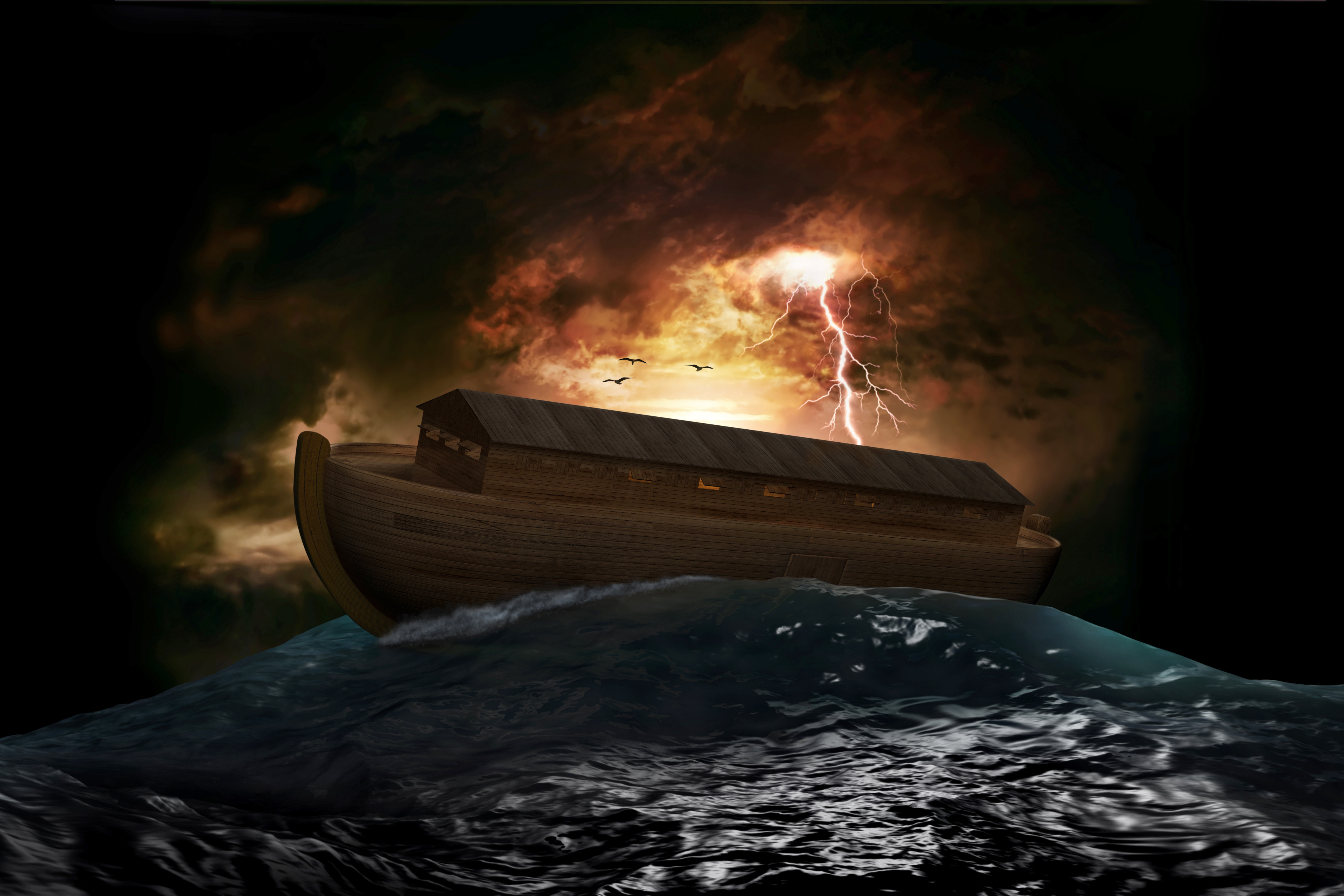
Noah's Ark

The Ark…so where is it? Next week we will show you scripture that gives us that answer.

J Stark

May, 2019

Article #2 of Our Daniel Studies

 ‘Pre-eminence, Purpose, Purity & Prophecy’ is an apt summary of the book.

Pre-eminence because the book shows time and again that it is God who rules in the kingdoms of men (Dan 4:17 / 4:25 / 4:32). It is He who orders the steps of a good man (Psalm 37:23), indeed,Man’s goings are of the LORD; how can a man then understand his own way?” (Proverbs 20:24). This was the basis of Daniel’s life, a confident assurance that whatever happened on the outside, however desperate things seemed to be, God was still on the throne, the One who is the same, yesterday, today,  (Hebrews 13:8).

Purpose for two reasons:

Firstly because this book underlines the fact that God has a purpose for all that happens in our lives (HIS creation), as Daniel and his friends show – who would have thought that these teenagers who were dragged away in shackles would be the ones to bring the most powerful nation to its knees? Paul reminds us:And we know that all things work together for good to them that love God, to them who are the called according to his purpose.” (Rom 8:28).

called

Secondly, purpose becauseDaniel purposed in his heart that he would not defile himself with the portion of the king’s meat, nor with the wine which he drank: therefore he requested of the prince of the eunuchs that he might not defile himself.” (Dan 1:8).

NOTE: This text in Daniel 1:8 infers that Daniel was also a eunuch.


In this context the ‘purpose’ referred to is a determined conscious decision that is made in the heartFor where your treasure is, there will your heart be also.” (Matt 6:21). Daniel’s treasure was to do the will of God regardless of what others thought or said, as we will see in chapter 6:Now when Daniel knew that the writing was signed, [that everyone should worship king Darius alone or be thrown to the lions] he went into his house; and his windows being open in his chamber toward Jerusalem, he kneeled upon his knees three times a day, and prayed, and gave thanks before his God, as he did aforetime.” (Dan 6:10). Oh for men and women who purpose in their hearts to serve God. In the New Testament Paul purposed in his heart to preach the gospel:But none of these things move me; nor do I count my life dear to myself, so that I may finish my race with joy, and the ministry which I received from the Lord Jesus, to testify to the gospel of the grace of God.” (Acts 20:24 NKJV) “…woe is unto me, if I preach not the gospel!” (1 Corinthians 9:16), as a result of this purpose of heart we read:And Paul, as his manner was, went in unto them, and three Sabbath days reasoned with them out of the scriptures” (Acts 17:2). For these people, serving God was a way of life, not just a ‘Sunday thing’. The challenge for us as we go through this book is: are we really living lives worthy of our calling? (Eph 4:1; Col 1:10; 1 Thess 2:12).

  • Purity. Because of Daniel’s purpose of heart there was a beautiful purity about Daniel (as there was with Joseph). It is so easy for us to get tainted by the world and our surroundings, but when we do, it can so quickly escalate out of control. Chuck Smith sums it up clearly and concisely, “The flesh is never satisfied”. Chuck Missler comments that the more you feed a desire, the more you need to feed that desire; if you give into drink, you will need more drink to be satisfied, but then that will not be enough. If you take drugs, you will soon need more drugs to feed your habit; but that will not be enough. If you lust after the flesh, you will find yourself wanting more and more. If you gossip, one little story is never enough. Sin will always take you further than you want to go, keep you longer than you want to stay, and cost you more than you want to pay. If you have a tin of pure white paint, how many drops of black paint would it take to stop it being pure white? And so it is with our lives. Daniel never gave in; and twice in the book of Ezekiel God points to Daniel as an example of what a righteous man should be like. (Ezekiel 14:14 /20). May God put us through His crucible to remove the dross so that, like pure gold, we become reflections of His glory.refletion


Next week: Article #3 of our Daniel study

Study Notes on the book of Daniel

series.jpg

Book of Daniel Study Notes

The following study notes (by Assistant Pastor Barry Forder) were used for Deal Christian Fellowship’s Monday night Bible studies during autumn – winter 2006.

The notes have been ‘tidied up’ to make them easier to read and understand. Additional comments, charts and graphs have been added where appropriate.

Whilst every care has been taken with grammar and spelling, these are only notes and as such are not intended to be a literary classic!

The real aim of these notes is to stimulate the reader to pursue their own study on the verses, issues and topics covered. There is no greater task that can be undertaken in this life than to seek to understand God’s Word. All other achievements in the Christian life will bear much more fruit if they are firmly rooted in the soil of God’s Word.But he that received seed into the good ground is he that hears the word, and understands it; which also bears fruit, and brings forth, some an hundredfold, some sixty, some thirty.” (Matt 13:23)

We Teach – You Decide

Northern Michigan Bible School

As always, the reader is encouraged to be like the Bereans in Acts 17:11, whoreceived the word with all readiness, and searched the scriptures daily to see whether these things were so’. In other words, don’t just take these notes as fact – check it out yourself. Let the word of God alone be the standard by which that you judge things.

Study to show yourself approved unto God, a workman that needs not to be
ashamed, rightly dividing the word of truth.

2 Timothy 2:15

Introduction

The book of Daniel is one of the best-loved books of the Bible; it gives us the events­ of ‘Shadrach, Meshach and Abed-nego and the fiery furnace’ and ‘Daniel in the lion’s den’ – histories that many of us learned and loved at Sunday school. However the years have come and gone and we so often tend to just skip over those quaint little histories without them having any real impact on our lives; however, I believe that once we have completed a serious verse-by-verse study of this amazing book we will never be the same. This book gives us real perspective, it helps us to see things the way that God sees them – the way Daniel saw them.

Daniel, whose name means ‘God is my judge’, was just a teenager, probably about 14 or 15 when the Babylonian army, led by king Nebuchadnezzar, came and took him, his friends and about 10,000 others of the brightest and royalty of Judah away from all they knew, and carried them away into a distant land to a culture and language they did not know. It’s hard for us to imagine the feelings and emotions of a young teenager being taken from the security of a family, not knowing if he would ever see them again.

Although we are told that there was *not a righteous **man in Jerusalem at that time (Jeremiah 5:1; Jeremiah 8:5-6), (*the reason for God bringing His judgment upon the Kingdom of Judah), it would seem that there were still some God-fearing mothers, for Daniel and his friends had been brought up to know and fear God and even their names were a continual reminder of the God of Israel. But would that be enough? After all, how many young people today, after seeing all that Daniel saw, and enduring all he endured, would make a stand for God in the midst of a pagan culture? How many of our young people leave home and go to the University of ‘Babylon’ somewhere in America, where secular humanism rules, and find their once vibrant faith destroyed as they become ‘free’ to do what they want, as the moral constraints and stability of a loving family (church and/or home) become just memories? And how many of us can truly say, as we are thrust out into the world every Monday morning, that we desire purity more than worldly pleasure? **Bar-mitzveh is at age 13 but military life begins at age 20.

secret agent

Secret Agent

Do we really fear God and shun evil as did Job? (Job 1:8). Do we run from temptation like Joseph? (Gen 39:12). Do we find ourselves dropping the odd expletive (Col 3:8), telling a ‘funny’ course joke to our colleagues so that we will fit into the crowd (Eph 5:4), maybe telling the odd little ‘white’ lie (Col 3:9).Out of the same mouth proceedeth blessing and cursing. My brethren, these things ought not so to be. Doth a fountain send forth at the same place sweet water and bitter?” (James 3:10-11). Were you in church praising God last Sunday, and then blending right back into the world on Monday? I heard of a man who went up to a Christian once and asked: ‘You’re a Christian aren’t you?’ The Christian replied ‘That’s for you to tell me’ – i.e. it should be obvious to all around us. Too many Christians act as secret agents, never wanting to blow their cover.

Daniel hadn’t been in Babylon long before they could tell what the most important thing in his life really was. It is my earnest prayer and desire that by the time we reach the end of this study, we too can say along with Daniel that we have ‘purposed in our hearts that we will not defile ourselves’ – no matter what the cost.

Dr Chuck Missler makes an incredible statement that he urges all of us to challenge, he says:

We are living at a time in history about which the Bible says more than it does about the time that Jesus walked the shores of Galilee or climbed the mountains of Judea”

Does the Bible really say more about the days we are living in than it does about the time of Jesus? If it does, then a study of this book will be one of the most important and timely ventures that we can undertake. May God richly bless you as you read and study His word!

General notes about the book

The book of Daniel records the collapse of the nation of Israel and the beginning of the ‘times of the gentiles’ – a period of time that will last until the Messiah returns to set up His kingdom and re-establish Israel.And after they had held their peace, James answered, saying, Men and brethren, hearken unto me: Simeon hath declared how God at the first did visit the Gentiles, to take out of them a people for his name. And to this agree the words of the prophets; as it is written, After this I will return, and will build again the tabernacle of David, which is fallen down; and I will build again the ruins thereof, and I will set it up” (Acts 15:13-16)

O Jerusalem, Jerusalem, which killest the prophets, and stonest them that are sent unto thee; how often would I have gathered thy children together, as a hen doth gather her brood under her wings, and ye would not! Behold, your house is left unto you desolate: and verily I say unto you, Ye shall not see me, until the time come when ye shall say, Blessed is he that cometh in the name of the Lord. (Luke 13:34-35)

And it shall come to pass in the last days, that the mountain of the LORD’s house shall be established in the top of the mountains, and shall be exalted above the hills; and all nations shall flow unto it. And many people shall go and say, Come ye, and let us go up to the mountain of the LORD, to the house of the God of Jacob; and he will teach us of his ways, and we will walk in his paths: for out of Zion shall go forth the law, and the word of the LORD from Jerusalem. And he shall judge among the nations, and shall rebuke many people: and they shall beat their swords into plowshares, and their spears into pruning hooks: nation shall not lift up sword against nation, neither shall they learn war anymore.” (Isaiah 2:2-4)

NOTE: We will deal more fully with this whole idea of ‘Replacement Theology’ – the lie that God is finished with Israel – in part 2 (chapters 7-12) of our Daniel study.

As we will see, the book of Daniel is very much a book of prophecy, foretelling the history of the world in advance; from the time of the Babylonian empire of Nebuchadnezzar, to the final worldly empire of Antichrist; then ultimately into the Millennial reign of Jesus.

A simple chart per the life of Israel:

  • Creation is around 6,000 BC; the beginning of time [Genesis 1:4, 5]
    Flood happened 1657 years later; 10 Generations from Adam to Noah
  • Noah to Abraham is also 10 generations; sometime around 2,000 BC
  • Exiled in Egypt 400+ years
  • 400 or so years under the judges but Tribal connections were a confederacy
  • Kings of a united Israelis, Saul David and Solomon
  • Nation of Israel becomes Northern and Southern kingdoms; Israel and Judah
  • Assyrians disperse the 10 northern tribes around 722 BC by Assyrians
  • Judah is captured by Nebuchadnezzar 606, 597, & 586 BC
  • 70 years captivity in Babylon
  • DANIEL reminds King Cyrus of the 70 years per Jeremiah (536 BC)
  • Zerubbabel takes first wave of about 50,000 back to Jerusalem-Judah now a province of Persia
  • 70 years later Ezra takes another small group back to Jerusalem-Judah
  • 17 years later Nehemiah takes the last group of Judeans back to Jerusalem-Judah
  • Daniel 11 comes into play but more on this in a later article

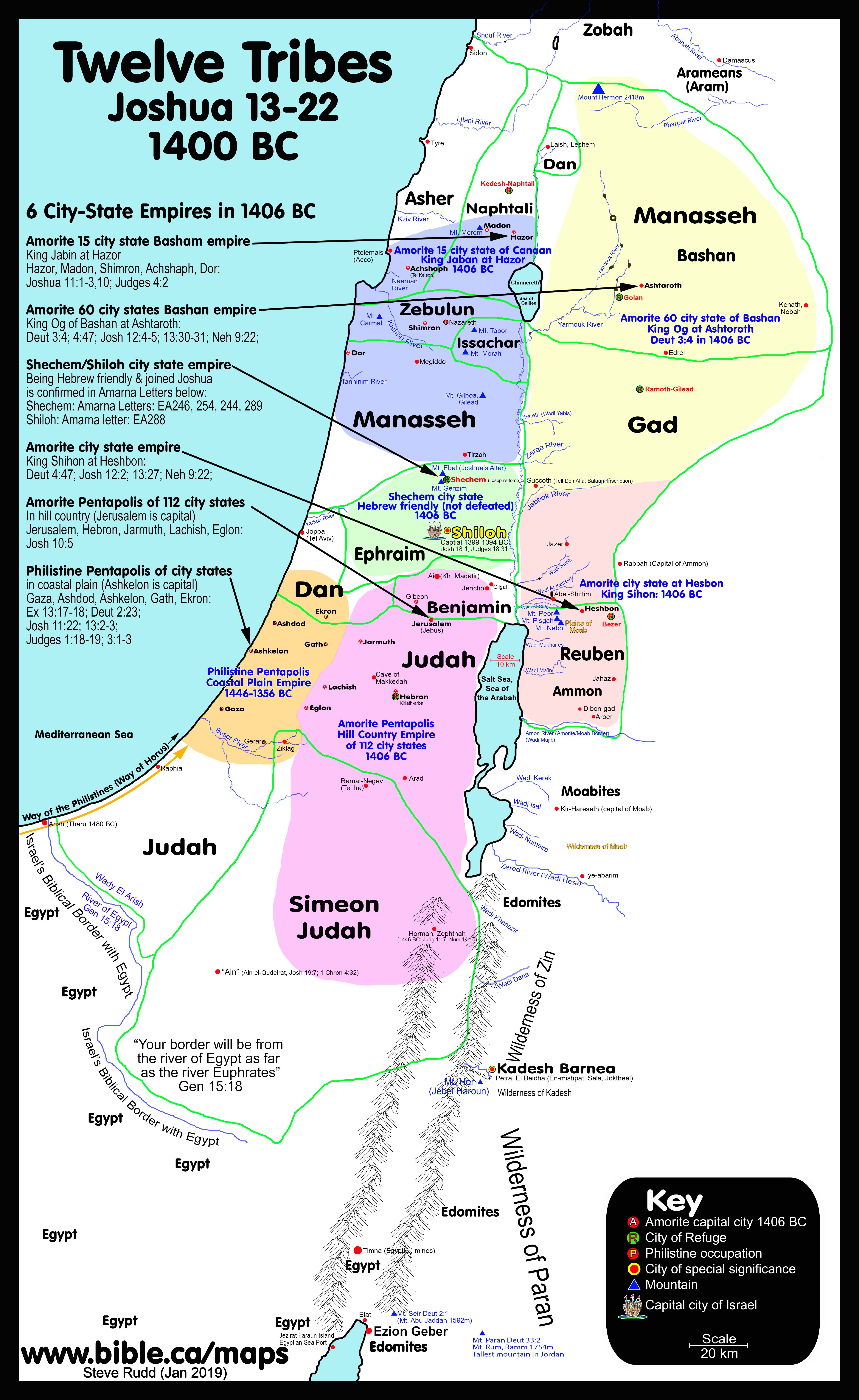
Note the map on the following page. Not only is the West Bank part of the Nation of Israel back around 1,000 BC, and as two kingdoms (950 to 720 BC) so is the east side of the Jordan River, today known as the country of Jordan.

This territory which is today called Jordan was the territory of the Tribes of Manasseh, Gad, and Reuben. Although this series of article is about the Book of Daniel, it would be wise to understand that “Father Abraham” had six sons through a late-life marriage with Ketur’ah [Genesis 25]. These sons Abraham did not want to mix with Isaac’s offspring so he sent them “EAST.” This would suggest that the populations in the territory Daniel spent his life is where descendants of Abraham’s six other sons and where he told them to go and occupy.

daniel map tribes.jpg

Seasonal Christianity

We will continue with our study on Daniel next week! We at Aha Bible Moments hope you and your loved ones have a blessed Resurrection Sunday. May we celebrate Jesus Christ our risen Savior!

____________________________________________________________________________________________

4seas0ns

Each season of the year has both its good and it’s not so wonderful parts to it. Spring brings the “bounce” back into summer lover lives. Summer has it sunshine and warmth, fall brings it colors and cooler weather; winter brings its non-discerning snow that blankets the good, bad and ugly of every neighborhood. But, there are also the rougher sides to each season. To most these downsides need not to be elaborated. They are personal perspectives. It also depends on which part of the world in which one is located. Winter in Argentina is summer in the northern hemisphere. So…it all depends upon the observer. One size never fits all. Plus, it greatly depends on what the observer sees compared to his or her expectations.

What about seasonal Christianity? The control word here is “consistency.” One size does not fit all but all should have the same joy of Jesus…but we don’t; neither in our eyes nor in the eyes of those who observe. Experience has taught us two, if not three, vital principles about what today is called Christianity and what the Book of Acts teaches (actually the entire Bible attempts to teach us if and when we seek, then we will find).

  1. If a true believer does not feel as close to God as s/he once did, even if it was just a few minutes ago, it isn’t God who moved. But, it is observed by others.
  2. Being a Christian is a life style, not a religion or denomination. Life styles are observable. In this case the old saying, “Do as I say not as I do” is foreign to a believer and his or her witness by observation.
  3. If we are neither hot nor cold per living a life in Christ, God has a bad taste in his mouth per that individual and HIS observation.
  4. MAYBE 4 PRINCIPLES…We may be the ONLY “Bible” a neighbor, fellow worker, casual observer, or person on the street ever reads.

believeIs it tough to be a believer in Christ? NO! But, a believer in Christ is a two word statement: to BE and to LIVE (believe). Is it tough to live the life of a believer? Only if we are more concerned about appearances, culture, social expectations, staus and what different people groups (Church, work, recreational, part of town…any observer) “may” think of us” including inabilities to forgive all who have sinned against us.

Matthew 6:14 & 15 makes it very clear. If we forgive others as in everyone for his or her sins against us, the heavenly Father will forgive us. If we do NOT FORGIVE others who violate us, then the same heavenly Father will not forgive us.

Forgiveness does not mean one must find a way to become a bosom buddy or be socially tolerant of bible compromises. It does mean to not hold it in one’s heart as an issue losing sleep over it or poisoning conversations “over the fence” as one might say. The Greek word translated as “forgive” in the New Testament, aphiēmi, carried a wide range of meanings, including to remit (a debt), to leave (something or someone) alone, to allow (an action), to leave, to send away, to desert or abandon, and even to divorce. Forgiveness is an action, not a feeling. Unfortunately to some, forgiveness per the Bible also means to “not speak against or slander.” Feelings get in the way of our actions.

The late J. Harold Smith once put it, “when one person (studies) reads the Bible, one hundred people read our lives” (emphasis mine). In 2 Corinthians 3:2 we read…(ESV) You yourselves are our letter (epistle) of recommendation, written on our hearts, to be known and read by all. It can be read in every language without interpretation. In biblical terms, we are epistles and (small letter “a”) apostles. Many will likely think or state, I simply can’t live by these standards. I slip up and people see that also. To think or even share that is an absolute truth, but to confess a wrong or hard feeling is part of being an epistle. This too is seen and read by observers. Paul called himself a sinner.

In no way does this article or the Bible suggest compromise as a solution to forgiving or getting along with the world. Forgiveness does not mean being tolerant. As true believers (to be and to live) we are told to not conform to the ways of the world as a way of life but to personally transform our hearts to reflect Christ in us. Compromise is the current vogue or way of this world.

No CompromiseWe do not compromise with the devil. He is the prince and power of this world. Jesus said in John 14:30 ”…for the ruler (Satan) of this world is coming. He has no claim on me.SIDE NOTE: Any who wish to be skeptics by pointing out that as this verse suggests Satan is coming so he is not yet here, read on. The Greek for coming is er’-khom-ahee.” It means “a middle voice verb used only in the present imperfect tense.” Huh? Yup! It means already present.

This is why we are commanded to “not conform to this world.” It is a matter of transforming our lives TO Christ even more so than from the world. It is a bit like two parallel efforts but the same goal. We should not need to run from sin as much as we should run to our salvation. Do we run from a danger or do we run to safety? Running from something does not assure we are ever far enough away from it to avoid some form of contact with it. Running to safety is specific. We YADDA (know) when we get there. Running to Christ is leaving a sinful life behind. Praise God there is sin forgiveness.

In a very real sense, this reflects what E. M. Bounds (1835-1913) put it in one of his great writings.

We have a wrong estimate of what we think is a Church’s strength. Paraphrasing him, Mega-churches must have it right because they have appeal and are MEGA for a reason of some form of demonstrative strength; size; beauty; parking spaces; awesome sound systems; music. To grasp a true churches strength we must go back and study, meaning STUDY to the Book of Acts for what it says, not for some form of starting point after which we adjust “church” to fit culture(s), men’s design, and political correctness to not be offensive. The church is not a building or denomination. Denominations or the lack of one is not the church. Believers are the church.

As Mr. Bounds puts it, “Church (Christianity) strength does not consist in its numbers and its money, but in the holiness of its members (emphasis mine).

Ephesians 4:4 backs him up…One body, and one Spirit, one Lord, one faith, one baptism, one God and Father of all. Here in this verse, preceding verses, or following verse can anyone find the church having anything to do with possessions, size, wealth, “eloquence [that] fills the pulpit (Bounds)”, and check book balances. These are all (kole in the Hebrew and pas in the Greek) man measures. E. M. Bounds adds, “The aggregate of the personal holiness of the members of each [congregation; one church] is the only measure of strength.” Like the oft used example of a “whatever” is only as strong as its weakest link.” Knowledge or even understanding is not an eternal choice.

There was a time when sin would slink around side streets and dark alleys (men love darkness rather than light). Today due to tolerance, political correctness, coming out of closets, and civil compromise, it is found in parades, flaunted on the Internet, heard and seen on the news, and in our school curriculum. Lord, forgive us for we have sinned as a church, a people, a nation, a creation. A. W. Tozer put it well when he wrote, “There is no middle ground. The Lord does not recognize ‘agreeing to disagree’.”

Being in church does not make one a Christian (sheep) by association. Neither can a Christian school, bible college education or being raised in what one considers a Christian family, make one a member of God’s family; even if a member of a local mega-denomination. I shared this with another person some time ago. He said, “Now you are getting personal.” I agreed.

Rev. Dr. Jstark
April 13, 2019

How Does the Book of Daniel Fit into the Bible and history? Part 1

puzzle fitHow does the book of Daniel fit into the Bible and history?
The following is a rather detailed history of the O.T. leading up to the time of Daniel. It will best serve as a personal Old Testament Bible guide. Memorizing it could be daunting. Knowing where to find the answer is the best approach. Find it in THIS background to Daniel. This would be the equivalent in most universities at a graduate level study. Do not be alarmed. There are no written tests.

Three Periods of Old Testament History:

The first verse in the Bible reveals that…

…“In the beginning God created the heavens and the earth.” Genesis 1:1 NASB

We do not know exactly when creation took place, as there may be a gap between

Genesis 1:1 and Genesis 1:2 as the additional possibility of a gap between these two verses and when God created day and night (V5). The way we currently understand the laws of Physics, including the Theory of General Relativity, secular and evangelical scientists are certain that the universe (time, space, and matter) had a beginning and has not always existed. The book of Genesis reveals that God created the universe “In the beginning…” This is also the beginning of the period we will label the Pre-Abrahamic period of Old Testament History; prehistoric per secularists.

In the Pre-Abrahamic period, the book of Genesis describes:

  1. From where man, woman, and marriage come.
  2. It explains from where sin and death come.
  3. It details the first murder.
  4. It describes a time when God destroyed the earth by a great flood.
  5. It outlines from where the nations and the diversity of races and languages that we have on the earth came. (It is not our goal at the present time to go into detail on any of these events. This study sheet is an overview of the Old Testament and what it is about to be better understood where and how the book of Daniel fits into the Old and New Testament.)

The Patriarchal period. Abraham is a man to whom three great religions trace their origins: Judaism, Christianity, and Islam. Both Jews and Arabs genetically come from Abraham. Abraham left his country, Ur in Babylon (modern day Iraq), and followed God to a new country, Canaan, where modern day Israel and Palestine are located.

Abraham had two sons, Ishmael, from whom the Arabs trace their lineage, and Isaac, from whom Israel and the Jews trace their lineage. Isaac had two sons, Jacob and Esau. Jacob, who later changed his name to Israel, had twelve sons – the twelve tribes of Israel are descendants of these twelve sons. The book of Genesis (which covers a longer period of time than the rest of the Bible combined) ends up with Jacob and his twelve sons and one daughter, their wives, and their kids all moving down to Egypt to avoid starving in a famine. (By the way, the book of Job is about another man who probably lived during Abraham’s time.)

The offspring of Israel (Jacob) spent more than 400 years in Egypt, and became slaves to the Egyptians probably toward the end of this period of time. The book of Exodus takes up Israel’s history near the end of this 400 year period in Egypt. Thus begins the third period of Old Testament history, Egypt and the Exodus. Four books of the Bible – Exodus, Leviticus, Numbers, and Deuteronomy – cover this period of time lasting about 40 years; mostly the wilderness wandering of the Israelites.

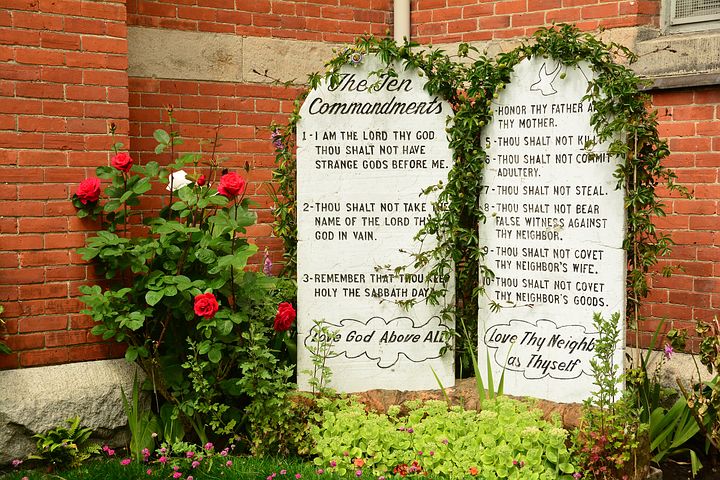
10During this period of time, God used Moses to liberate the Israelites from slavery in Egypt. Also during this time, God gives Moses the Ten Commandments and other laws for the Nation of Israel. After God gives the Ten Commandments and the other laws,

Moses sends twelve spies into Canaan. When they return, ten of the spies give a bad report which scares the Israelites. They complain to Moses and to God refusing to enter the Promised Land. God punishes Israel by making the continue living in the desert for about 40 years. The Egypt and the Exodus period begin about 1446 BC.

After the 40 years of living and wandering in the desert, the next period begins. This period, Conquering the Land, covers about 10 years. Israel conquers some of the land of Canaan in the area of the world now known as Israel and Palestine. The people of

Canaan were evil but their origin comes is based in the time of Abraham through Ishmael and Esau.

They sacrificed their own kids to a god named Molech by burning them alive. This gruesome act is one of the reasons that God ordered Israel to conquer the land of Canaan. The book of Joshua covers this period of Old Testament history. Israel conquered Canaan beginning around 1406 BC, but they never followed through per God’s instructions.

Dr. jStark

April 2019


Decoding Daniel – Part 1

               An In Depth Classroom and Home Bible Study

DEEP


The Book of Daniel reveals God’s sovereign control of history from 605 B.C. to the Second Advent of Christ. This prophetic writing contains hundreds of predictions that revolve around five basic themes.

1. The Rise and Fall of Four Empires
2. The Coming of the Everlasting Millennial Kingdom
3. The Coming Princes
4. The Time of Israel’s Distress
5. The End Times

My objective in Decoding Daniel is to show history revealing prophecy and prophecy revealing history. Yahweh is the Lord of time and history. They are one and the same; not one a story and the other facts of history. They are both part of the same historical facts.

He is sovereign over the world, though considerable power and freedom of will have been given to human and angelic beings. Because of this freedom, a great conflict within the physical and spiritual realms is revealed in the Book of Daniel as humans, angels, Satan and God strive to control the future. Today they are cloaked in what man calls politics. Do not be swayed, That is a farce of Satan in his attempt to confuse facts. (Recommended reading: Satan’s Confusing Counterfeits by Joe Crews)

God elects to relate to humanity in such a way that humans become a factor in His life and He becomes part of our lives. Paul is strong on this point in his Philippians letter. Because of this interaction, prayers, dreams and visions play a significant role in the events of this book (Daniel) as God reveals the rise and fall of future empires and princes.

Although biblical history shows that God changes in the way He feels, plans, and acts in response to our response to Him, there are boundaries to His change. The LORD responds to human actions without compromising His revealed, unconditional plans and purposes. In addition, He never violates His legitimacy, righteousness and holiness. The future God has mapped out in the Book of Daniel will occur. His prophecies we find in history textbooks of the secular world proving many of these prophecies have already happened.target

Interesting side note… The fact that Daniels accuracy is so on-target, secularists and even some religious sophisticates claim the Book of Daniel had to be written after the fact of history itself. In other words, it was and remains too accurate to be true. Hmmmmm?

From the beginning, man’s history has been the story of rebellion against God. Instead of developing morally, humanity continues to head down the slippery slope of decadence, declension and destruction. For this reason alone, God is able to foretell the future with absolute accuracy as He overrules evil for His plans and purposes. Although in some of Daniel’s prophecies evil may appear to be victorious, God is working behind the scenes for good [Romans 8:28]. Joseph characterized God’s sovereign rule over evil for good in this same way in Genesis 50:20: “You intended to harm me, but God intended it for good to accomplish what is now being done, the saving of many lives.”

Prophetically, the Book of Daniel is the key that unlocks eschatology; the study of the last days. It is indispensable for understanding Christ’s predictions and the Book of Revelation. Many of its symbols are employed in diverse ways in the Apocalypse of Jesus Christ. [Recommended web site: http://www.biblestudyhour.net/Apocalypse.html] Below is an extract from its pages.

God’s plan for the world is unfolded in amazing detail in Daniel. *Nebuchadnezzar’s Dream of the Great Image, Daniel’s dream and visions of the Four Beasts, and the Ram and Goat, along with Gabriel’s unveiling of the Seventy ‘Sevens’ provide the framework for prophetic history from 605 B.C. to the second coming [Advent] of Christ.

Daniel is written in prose and it differs from other prophetic books of the Bible which often have their oracles written in poetry. Consequently, it appears in the Hebrew Scriptures among “the writings” and not “the prophets.” Nevertheless, Daniel cannot be read like a narrative or novel since it contains images and symbols that need to be understood before God’s plan for the future can be understood. One cannot grasp its prophecies without first knowing a great deal about the rest of the Bible and the secular histories in which it is founded.

The kinds of predictions in the Book of Daniel are twofold:

  1. There are “types” or “foreshadowing’s” concealed within the narratives themselves;
  2. There are revealed dreams and visions of future events, people and places.


The prophet has deciphered the dreams and visions with the help of the Spirit of God. Herein a significant part of the outline of God’s plan for “the times of the Gentiles” has been decoded by the prophet. However, translating the details of this period is often left to the readers. My hope is to aid in this task by:

1. Connecting the symbolism decoded by Daniel to historical events, people and places.

2. Interpreting and connecting the symbolism that belongs to yet future events, people and places based on other prophecies contained in the Scriptures.

3. Discovering and interpreting the “types” in the narrative sections.

4. Explaining the words that have been closed up and sealed until the time of the end. In no way is it within my knowledge and study to open what has been sealed by God but we can possibly determine WHAT has been sealed. Someday the hidden will be revealed to all creation.

Practically, the Book of Daniel abounds with personal applications. Daniel himself models a godly life, blessed by God from teenage years through old age. A question section appears at the end of each chapter and will be discussed in our Bible Study containing a few applications gleaned from Daniel and others mentioned within that chapter. These questions can and will be an active ingredient for gaining knowledge and understanding. What we desire to do with gained understanding is an individual’s call. We will add secular historical evidence supporting Daniel’s incredible incites of wisdom and understanding of the times.

Chronological dating of Old Testament events varies slightly among church and secular scholars. Many variations arise from the Biblical writers themselves. Some count the ascension year as the first year of a king’s reign, others do not. Earlier scholars date the fall of Jerusalem in 587 B.C. and Artaxerxes’ decree to rebuild Jerusalem in 445 B.C. I have opted (JIV) to follow the scholars who date these events as 586 B.C. and 444 B.C. Not a biggie considering it is only a give or take of one year. None the less, it is my hopes to self-explain as we progress through this great study and grasp understanding while offering convincing evidence this is the true Word of God and true history all in one.

Somewhere during our study will be a chronology of Daniel with supporting facts. We can divide Daniel three ways: 1) Take it as it is presented in most evangelical Bibles; look at it through its chronological order; 2) divide it between the two languages that it is written in: 1-2:4a (Hebrew), 2:4b – 7 (depending on how one looks at tense, voice and whether Daniel is being quoted or is his own quote) is written in Syriac/Aramaic. 3) Chapter 8 – 12 is written in Hebrew.

The Book of Daniel has been a battleground of “higher criticism.” For instance, liberals view this book as Pseudepigrapha, written to inspire the hopes of the Jewish victims during the Seleucid persecution of 170-165 B.C. I (JIV) believe it was written by a prophetic Daniel at the time of the 70 years Jewish (not Israeli) Babylonian exile, perhaps into the rule of Cyrus of Persia. One’s beliefs and interpretation of Daniel can be a litmus test of conservative or liberal orthodoxy. The interpretations of Daniel’s prophecies sharply divide pre-millennial views from a-millennial views. The reader should find that the explanation in this commentary is conservative and (JIV) pre-millennial Tribulation. Enough evidence and scripture will be provided to validate this position. My basis is that the covenant made between God (pre-Jesus’s N.T. times) is not yet fulfilled and the covenant with the Church (body of Christ) is under a New covenant… the church.

Next Week- Decoding Daniel Part 2


Rev. Dr. James Stark
original copy 3/20/2013
Revised March 2, 2019