
 First we must know what or where Pathros is per verse 1 in chapter 44. Without going into the Hebrew, it is the southernmost part of Egypt. Egypt was sometimes divided into two kingdoms and had two pharaohs; one in the lower kingdom next to the Mediterranean Sea and one in the upper Nile in northern Sudan. If you wish additional explanation per Pathros in Jeremiah 44:1, go to http://www.icr.org/books/defenders/4499/.
Simply put, the fleeing remnant of Israelis of the Tribe of Judah spread out in Egypt. Their motive? Possibly thinking they could hide from God’s promised wrath for having fled there instead of (see chapter 42 article) remaining in Judea. This same act of defiance was done by Jonah in the 8th century B.C.; about 200 years earlier. He fled or tried to flee God by sailing to Tarshish, Spain. We can run but we cannot hide.
Amazingly, Jeremiah 44 tells us in verse 2 that all the cities of Judah and Jerusalem itself at this time are DESOLATE. Chorbâh in the Hebrew can mean “totally absent of mankind” or “a land laid waste and in decay.” Since the YLT (Young’s Literal Translation) is a fairly accurate word-for-word translation, it says “there is none dwelling in them.” This means at this time neither Israeli nor Arab dwelt in this land at the time Jeremiah had these words penned to scripture. However, if we consider verse three, it may mean it is desolate of Judeans… We read the same words in Jeremiah 44:6.
It is clear that God is a jealous God (Deuteronomy 4:24) and Israelis knew this from the onset. The Book of Deuteronomy was written by Moses; it is in the Jewish Pentateuch. Moses himself told them God is jealous. “Put no other god before me;” i.e. Ten Commandments. If it was wrong yesterday, it is still wrong today. He is the same yesterday, today, and forever. Years between do not change right from wrong in God’s eyes. However, and this is a warning to the reader, a time has now come when some things that are right are called politically wrong, and wrong is called politically right (Isaiah 5:20). Go back to Jeremiah 3 and we see that God considered Judah’s sins more frightful than those that brought demise to her northern cousins, the Kingdom of Israel 120 plus years earlier.
Reading Jeremiah very closely, it appears that the Judeans went out of their way to provoke God by burning incense to other gods. Example: A little girl went to a basketball game with her father. He told her that she could play in the stands as long as she did not bother other people and did not step foot on the basketball court. Shortly thereafter, she went down to the bottom bleacher putting one foot onto the court while looking back at her father. Was she wrong or just sort of wrong? This is provocation even if it was one foot over the line.
Jeremiah 44:7 takes an unexpected twist. God does not say that their idol worshipping was as hurting to him as much as he asked…”Why are you continually hurting yourselves?” Jeremiah 44:8c is most earie when we look at the news today seeing people after people line up against Israel. It reads…”The people of all the other nations on the earth will say bad things about you and make fun of you.” Isn’t this precisely what is going on today? They brought it upon themselves.
Jeremiah 44:10 can be applied across the board to the Israel we see even today, 2017.
“Even to this day the people of Judah have not made themselves humble. They have not shown any respect for me, and they have not followed my teachings. They have not obeyed the laws I gave you (them) and your (their) ancestors.” [ERV]
The next few verses are explicit to those who fled to Egypt against God’s will. He assures all that they will not see, nor will their children even in Sudan ever again see their home land. The King James Version says: “…they shall all be consumed, and fall in the land of Egypt; they shall even be consumed by the sword and by the famine: they shall die, from the least even unto the greatest, by the sword and by the famine: and they shall be an execration (insult), and an astonishment, and a curse, and a reproach.” There is no room for theological wiggle room. They are condemned by God himself.
In verse 16 the people once again spoke in unison, “we will not harken onto your voice. We will do as we please.” Now we get some interesting insight as to why or the rationale behind why the Catholics worship the mother Mary as the Queen of Heaven. Keep in mind that Jesus doesn’t appear on earth for another 600 years, none the less, this is of interest; 44:7. “But we will certainly do whatsoever thing goeth forth out of our own mouth, to burn incense unto the queen of heaven, and to pour out drink offerings unto her…” The Queen Mother of Heaven? Hmmmm?
Even here in Jeremiah it is seen as a sin unto God. What makes it correct to do today? The wayward Judeans even mention her again in verse 18, 19 and 25. They blindly blame their lack of making offerings to the Queen Mother of Heaven for their demises and famines. They say they must return to that way of worship in order for things to be corrected. They did not know of a future mother of Jesus named Mary. However, Catholics of today do.
Jeremiah 44:23 points out that it is because of this worship practice and others like it that they are in the struggle they are currently in. Jeremiah 44:23c states: “therefor this evil is happened to you.” This is pure blasphemy to God the Holy Spirit. They looked him in the face and opted for another way to worship. They all died in the land to which the fled. We wonder how people today can be so blind. Easy! They are just like Israel and Judah of old. They wanted it their way. I’ll Do It My Way. Their choice has been made. Their judgement is sealed and of their own making. In Jeremiah’s closing remarks of chapter 44, he is very clear. He includes and mentions even the women [v25], not just the men.

Only ONE Way.
Unless one knows a bit of Egyptian history, Pharaoh Hophra mentioned in 44:30, sometimes identified as King Apries, was the one with whom King Zedekiah of Judah made an alliance and wanted to aid him in revolting against Babylon. While the Babylonians (Chaldeans) were besieging Jerusalem, HOPHRA/APRIES came out to confront Nebuchadnezzar’s army. The Babylonians left the besieging of Jerusalem to challenge him. Pharaoh Hophra changed his mind and returned to Memphis, capital of Egypt. Nebuchadnezzar later attacked and burned all the worship centers and capital buildings in Memphis, Egypt; just as Jeremiah had predicted would happen in Jeremiah 37:8.
Author’s NOTE: In 1909, in the course of excavations carried on by the British School of Archaeology in Egypt, the palace of King Apries, aka Pharaoh Hophra, was discovered on the site of Memphis, the ancient capital of Egypt. They found a silver carrying cart (palanquin) burned just as Jeremiah had prophesied would happen during the time of the fleeing Judeans in Egypt. This included many buildings and the palace of Pharaoh Hophra. My, my, my. How coincidental?

Dr. J. Stark
November, 2017

 Why did they go to Jeremiah, the one they have despised for over 20 years? It appears that he has been the true prophet and those who called him false or a liar, were the false prophets. Jeremiah obviously had an “in” with God that no one else had. They needed help as all else was doomed.,


 Zechariah himself had been appointed king over Judah by Nebuchadnezzar but power went to his head and God was not in his heart. He had rebelled in hopes of help from Egypt. It never came.
 So, what are their options? Like most in today’s society, deny God until one gets into a fix s/he cannot get out of unscathed. Their initial design was to flee to Egypt. However they first go to Jeremiah and beg, yes, BEG that he pray to Jehovah-God seeking guidance. The significance of the new problem they all shared, it was not a seeking of God’s forgiveness, but a seeking of safety. We see this in chapter 42; our next article. Chapter 42 is fascinating in that God regrets having sent his people into captivity in Babylon and agrees to protect them but only if they remain in Judah and worship him as their one and only God.
 he Treasury of Scriptural Knowledge puts it this way:






 A bit of knowledge goes a long way in helping us determine Zedekiah’s motives per his request of and for Jeremiah to pray for “us.” First, it was not a request of forgiveness. He wanted reprieve, but offered no request for a prayer of confession. This is what we call in modern times, a fox hole prayer request.” Get me out of this mess!
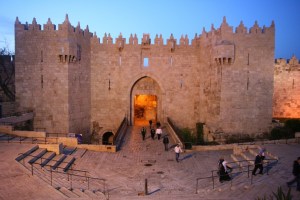 Zedekiah had rebelled against being subservient to the Babylonians. That is why Nebuchadnezzar was at the gates of Jerusalem. Recall that previously Zedekiah was put on the throne of Judah by Nebuchadnezzar. This was about 10 or 11 years later. So how do we conclude these possible thoughts of Zedekiah? The next two verses tell us. God tells Jeremiah to go to the king and tell him that Pharaoh’s armies were going to retreat and never confront the Babylonians. This is opportunity spent. God had the solution to Judah’s predicaments. It was on its way out of Egypt. BUT!!!! Rather than appreciate what God was preparing to do for Judah by confessing HIM as their real and only God, they only saw that the armies of Babylon had pulled back. No longer was Babylon an immediate threat. In fact, the princes of Judah hoped it was a done deal. They deluded themselves into thinking the Babylonians thought it unwise to attack Jerusalem/Judah.
 Here is where so many get the history of this event wrong. It was neither Jeremiah nor Baruch who read the scroll to the King. It was his servant Jehudi who read the words from the scroll. Since it was winter time in Judah, the King was in his heated winter rooms of the palace. We know this as verse 22 tells us this is so. There was a fire in the fireplace in which Jehoiakim was sitting. AS Jehudi read from the scroll, the King would grab it, cut off the section Jehudi had read, than toss the scrap into the fire place. He had total contempt for the Word of God.


 We will find that linguistic studies are a fairly solid platform of origination of people, places, and things in our continuing studies of Noah’s DNA; which way did they go. Today the name may not reflect the current occupants of a given land, but it is historically reflective of the name of its founders; i.e. Alexandria, Egypt… a city built by Alexander the Great and named after its founder. Add to this as to why God had so many “BEGATS LISTED” in His Holy Bible. We can trace global events and people through a bible study such as this course. “Study to show one’s self approved.”
 AHA Bible Moments